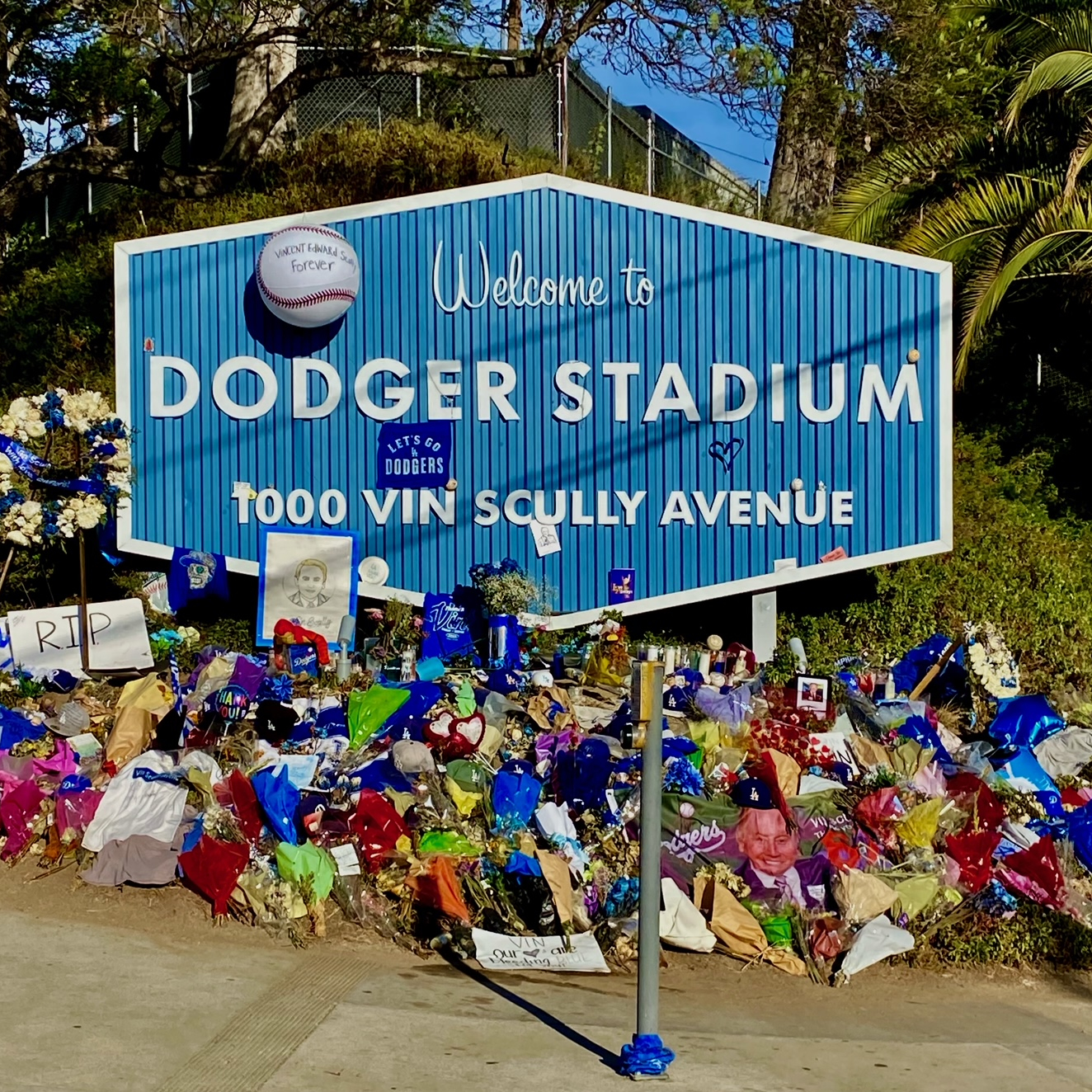
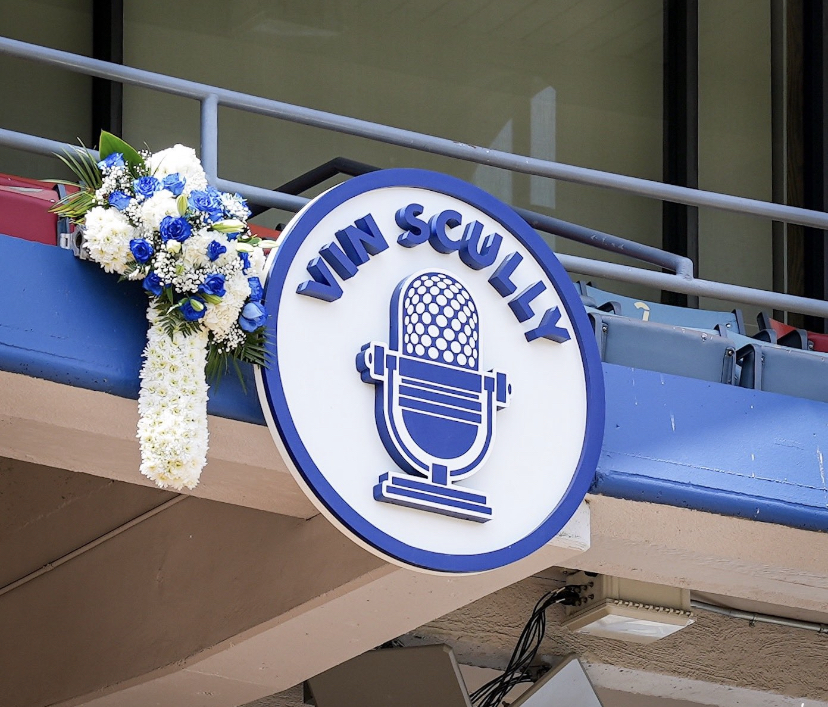
This is dedicated to those who contributed an essay to the book prior to the June 2023 deadline and are no longer with us follow the finished manuscript release. It is also a place where we can honor those who passed away with some connection to Scully, giving us another moment to ask:
If I were to write a eulogy for ….
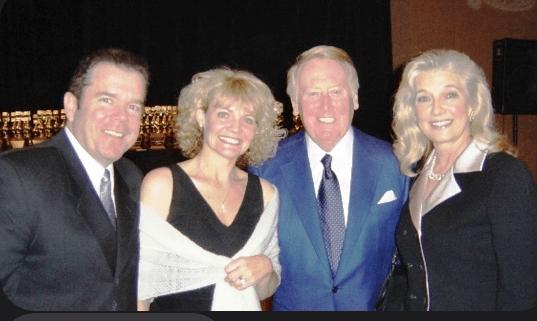
Bill Seward (1958 to 2022)
The longtime Los Angeles sportscaster at KCBS and KNBC died of cancer about eight months before Scully’s passing. I would have recruited him for an essay, based on his life growing up in the San Fernando Valley, having gravitated to the broadcasting world after coaching baseball and football, and then working on KFWB-AM DodgerTalk.
And it would have been a spectacular essay.
Plus, I already had that photo above ready to go.
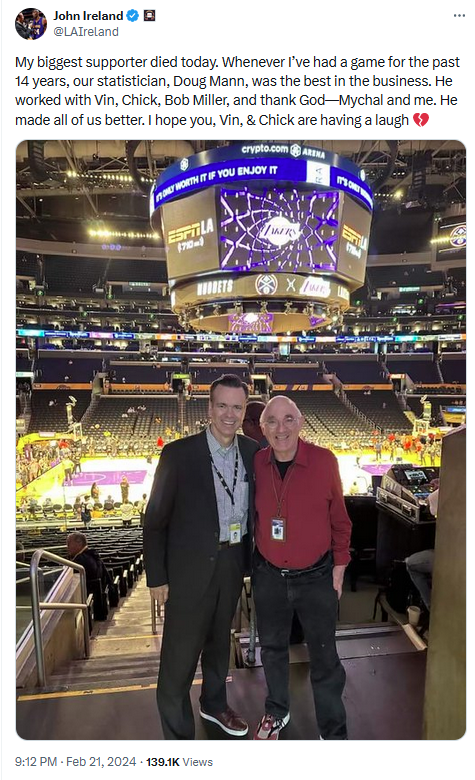
Doug Mann (1952 to 2024)
The exceptional Los Angeles sports statistician was a man of numbers, and he contributed a great number of words in an essay about the years he worked with Vin Scully on Dodgers games — explaining their friendship, their conversations, gifts exchanged, mutual respect. So much so, it became an intense, but joyful, give-and-take about how his essay could be reworded, tightened up and still have the same impact. John Ireland, who also contributed an essay to the book, took time on his ESPN AM-710 radio show to talk about Doug’s life and work after his passing.
Doug and I sat over several lunches at Gus’s World Famous Friend Chicken on Crenshaw in L.A. going over his ideas, rewrites, memories, more rewrites. He was appreciative of having his voice sound as true to his feelings as possible. I was able to have Doug read a printed out version of the final book edits before he died in February, ’24. I feel comforted this was one of the last projects he threw himself into and wanted to make right.
Cheers and farewell. Someday, there will be the ultimate how-to book called “Stat Mann.”
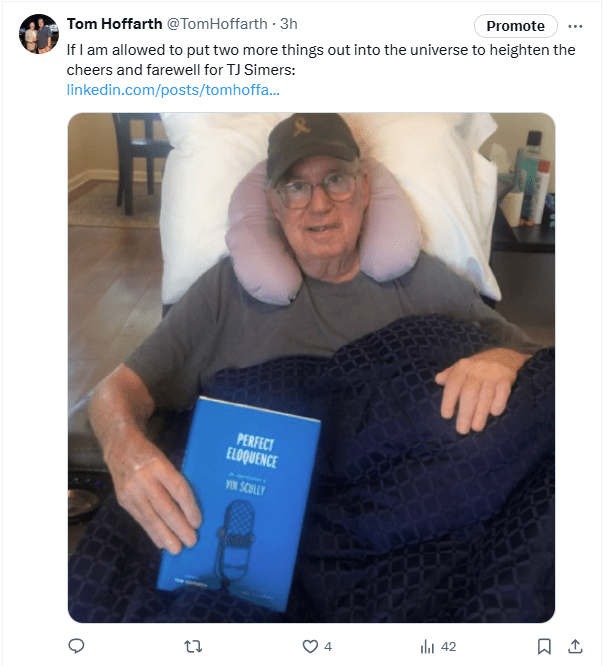
TJ Simers (1950 to 2024)
The columnist for the Los Angeles Times (and for a bit with the OC Register) responded immediately when asked if he would do an essay for the book. I wrote about this in a LinkedIn post. Allow me to expand it a bit more:
When I asked TJ for an essay, I may have thought it would be closer to the one he did about Vin in March of 2013, called“Vin Scully prompts memories of someone dear.”
Here is how TJ ended that column, with Scully talking:
“It’s also being Irish and from the moment you can understand anything you’re told you’re going to die. I know it all can be gone in seconds, so I’m living it. I had one of our beautiful grandchildren, K-K, crawl onto my lap, cuddle and put her little hands around my face. Inside I’m thinking I’m king of the world and she says, ‘Grandpa?’
“Yes honey,’ I tell her.
“You’re old, ” she says.
“You bet I am,” I tell her.”
“And she says, ‘Grandpa, you’re going to die.’
“Bless your heart,’ I tell her.
“Everyone, even the flowers, are going to die. But look how lucky I am.”
Aren’t we all.
TJ also wrote this inspired piece in Sept., 2011 — “Don’t be fooled — Vin Scully is a troublemaker.” It included with an ode to “The Music Man”:
The guy is a true blue rabble-rouser.
I’m telling you, ya got Trouble, my friend, and that’s spelled with a capital T, and I wouldn’t be surprised later to learn Vin Scully has a pool table in his home.
I don’t know how he does it. It’s like Major League Baseball has these games scripted and Scully gets an early read and chooses to give away the ending.
As Opening Day 2011 neared, TJ came up with “It’s time to pull up a chair and tune in to Vin Scully again.“ It included this story TJ recounted in his essay for the book:
“(We) meet by coincidence in the bathroom, and while standing there, of course, Vin has a story to tell.
“The Dodgers had a player, Lamar Bridges, who was called, ‘Rocky.’ Well, Rocky Bridges lines up for the national anthem and tells the guy standing next to him that he’s not a big fan of the song because every time they play it, he has a bad game.”
I might never have a more memorable visit to the bathroom, or a louder laugh.”
In August of 2011, TJ circled back with a notes column headlined “He really hopes this Vin Scully guy makes the grade“ and it includes this gem:
John Richards, a season-ticket holder from Yorba Linda, e-mailed Tuesday to let me know the Dodgers have asked him to fill out a survey.
On a scale of 1 to 5, “They wanted my opinion of Vin Scully in the following eight areas: 1. Knowledge of baseball; 2. Knowledge of Dodgers organization; 3. Objectivity; 4. Accuracy of calls; 5. Storytelling ability; 6. Focus on the game; 7. Style; 8. Overall performance.
“This is like polling Catholics about Mother Teresa’s work,” he said. “This is Vin’s 62nd year behind the microphone in a broadcasting career that no one will ever emulate. Is this portion of the survey really necessary?”
By the time the season opener of 2012 rolled around, TJ had decided to write:
“Some things never get old, like baseball’s purity, and Vin Scully” and that included him capturing this story:
“Gil Hodges goes home for the birth of his first child, we’re in Battle Creek, Mich., for an exhibition game, and manager Burt Shotton tells me I’m going to suit up.
“They didn’t have a uniform, so I had to wear Hodges’. I was 140 pounds of dynamite and Gil was a marble statue. I put his uniform on and ‘Dodgers’ comes down to my belly. . . .
“They tell me to go shag fly balls, so I’m out there and Roy Campanella hits a ball about eye high on a dead line to center. I catch it but I’ve never felt a ball hit my mitt with such impact. I knew I didn’t belong out there; what am I, crazy? I left the field.
“I head to the clubhouse and kids want Hodges’ autograph. I’m telling them I’m not Gil, but these two kids stay with me the whole way and I’m thinking what a sweet guy Gil is and these kids are going to think Hodges won’t sign for them.
“So I signed Gil’s name, remembering he made a little circle above the ‘i’ in Gil. I’m embarrassed to say it, but if those kids are still living, they think they have Hodges’ autograph.”
My goal was to have TJ write something related to this event above in April, 2008 that he invited me to watch in person: “It was just an idea, ‘Scully & Wooden for the kids.’”
Simers relates this story Scully told him:
“I’d like to be remembered as a good father, a good husband and a good man. I never think of broadcasting. People are so funny. My first son, God rest his soul, I named him Michael. Mike. And people would say to me in all honesty is that for ‘microphone?’ What? How in the world could anyone think that?”
Simers wraps it up: A friend of Michael’s, by the way, dropped off a gift at the Scully home a few years back — a basketball autographed by John Wooden.
“A treasure,” Scully calls it — just what others might call the chance to spend a little time with both of them.
Then in 2014, on Father’s Day, Simers wrote again about how much he felt attached to Scully:
“Like a particular song marking time in someone’s life, Scully’s voice brings back a rush of memories for mothers, fathers and children who have bonded while following the Dodgers.
“I could talk all day to Scully, look forward to the day’s next chat, and maybe that’s why he often keeps walking when we meet.
“Scully is the most gracious living giant I have known, purposely settling back in his chair when he noticed how much fun Wooden was having. He made it Wooden’s night.
“The show over, he wheeled Wooden to center stage and stepped to the side so Wooden could say his goodbyes. It was almost perfect.
“Maybe it’s because Scully looks like my dad, red hair and all, or maybe it’s because every kid wants to make their father proud. Maybe it was because it was Father’s Day weekend, or maybe it was because my father was more like Scully than I would have guessed, adopting Scully’s mantra of always leaving them wanting more.
“I wanted more; I wanted my dad there for the night of a lifetime.”
What TJ ended up writing for the book was nothing even close to these. Maybe because he already poured his heart out with love for Vin. Instead TJ did something more to what I asked: If you could deliver a eulogy for him, what would it be? It was more about laughs and fun. The serious stuff had already been done. It was all I could ask.
One more thing: When Jill Painter Lopez sent me that photo above, confirming TJ got a copy of the book as she lovingly visited him in hospice care at his home recently, I asked about what the ribbon on his hat represented.
This was the response from his wife Ginny:
His hat represents children’s cancer. He used to always wear a Mattel Children’s Hospital hat. When he wore out the five he had and they weren’t making them any more, (daughter) Tracy bought him a few other hats representing children’s cancer. He raised between 2-3 million dollars for Mattel’s.
So, If was to write a eulogy for TJ, that’s what I would have done, everything above. In one big gumball.
Brian Wheeler (1962 to 2024)
The NBA Portland TrailBlazers’ radio voice from 1998 to 2019 affectionately known as “Wheels” battled a variety of health issues that caught up with him as he died on Nov. 8, 2024. The Oregon Sportscaster of the Year in 2007 had been writing his autobiography — we hope it can be finished. He told us many stories about growing up in Los Angeles, listening to Vin Scully and Chick Hearn, and eventually getting to meet Scully at a Dodgers game.
Here is a tribute to Wheels from The Oregonian:
Wheeler, a lover of classic rock and Bugs Bunny cartoons, also endeared himself by being open about his personal life. He was adopted, had an abusive stepfather, met his birth mother later in life, longed to have a family and struggled with weight gain, which impacted his health.
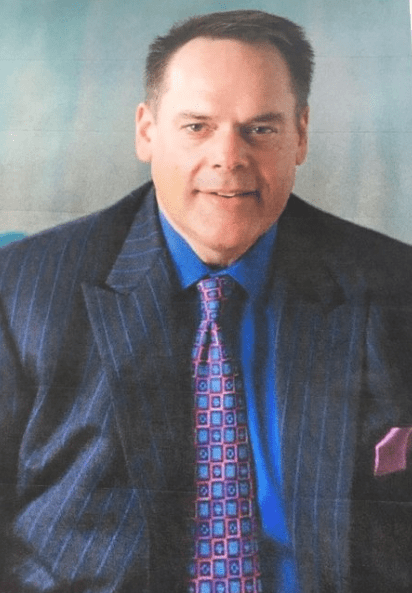
“That’s why I think fans loved him so much and identified with him so much,” said Mike Barrett, former Blazers television play-by-play announcer. “And even his humility in the things that he did struggle with, I think that’s what made him such an approachable figure.
“And people could feel the love that he had, not only for the team but for the city, for the region and for the fan base. The fact that he didn’t really have a family of his own, in terms of a wife, kids, and even for a long time, birth parents that he knew about, the Blazers family was his family.”
Through Wheeler’s essay for the book, we were also introduced to Mike Parker, and the Oregon State voice relayed similar stories about hearing Scully during his childhood in L.A.
Fr. Willy Raymond (1943 to 2026):
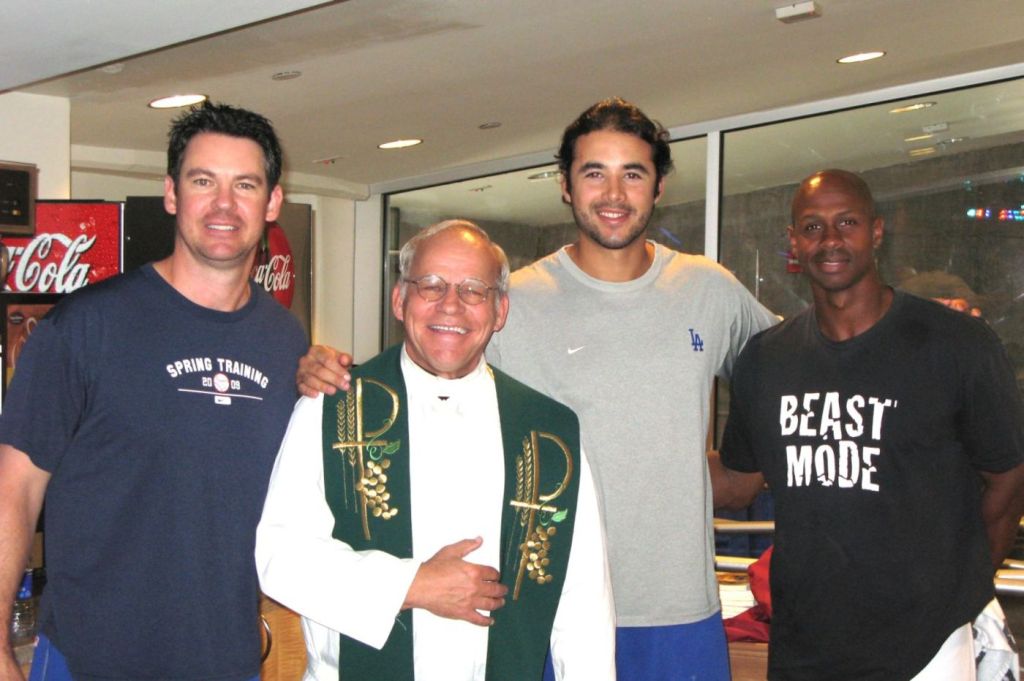
“He remained a diehard fan of the Boston Red Sox, even though he served as Chaplain for the Los Angeles Dodgers.”
That was the last line in the obituary circulated about the President Emeritus of Holy Cross Family Ministries who died, February 16, 2026, in Bennington, Vermont. A native of Maine, Raymond joined the Congregation of Holy Cross in 1964 and was ordained to the priesthood in 1971. What drew him to Southern California was to act as National Director of Family Theater Productions in Hollywood from 2000 to 2014, residing as an associate pastor at St. Monica Catholic Church in Santa Monica. He was a board member of Catholic Athletes for Christ since 2005.
Scully did a project for Family Theater Project in 2011 called “Faith Bowl IV”:
In Raymond’s essay included in Chapter 2 about faith and family, which we helped him shape after an interview, he said :
We had a Palm Sunday vigil Mass at Dodger Stadium one year, and it called for the narrator to read the whole Lord’s Passion. I knew Vin was going to broadcast the game right after this Mass, so I said, “Mr. Scully, you know, this Mass has St. Matthew’s Gospel and the narration is pretty long. I was wondering if you could do it, but I don’t want to …”
And he said: “Oh, yes, I can do that.” And he did it, with that incredible voice.
The Pittsburgh Pirates were in town to play the Dodgers that weekend, and after the Mass, some of the players and coaches came up. One of them said: “I have never listened to the Gospel as attentively as I did when Vin Scully read it.”
Fr. Willy then left us with this profound observation:
Soren Kierkegaard was a theologian and philosopher from Denmark who talked about the three levels of development. Level one is the aesthetic side, driven by the pursuit of power, honor, pleasure and fame. Level two is the ethical side, which is about following all the rules, doing good and avoiding evil. The third and highest level he called religious. That is characterized by a leap of faith into a profound relationship with God. Pope Francis would say it is an ongoing conversion through encountering Christ. I believe Vin Scully lived his faith on that third level. He was so trustworthy about his faith, not one just following the rules, but doing it out of love because he genuinely believed in it.
Bruce Froemming (1939 to 2026):
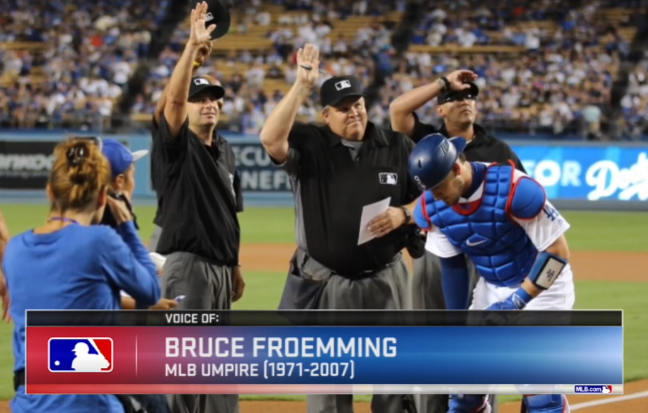
Froemming was third all-time with 5,163 games umpired in Major League Baseball during 37 seasons (1971 to 2007) and did 11 no-hitters, including Nolan Ryan’s record-breaking fifth, which Vin Scully called. Froemming was also the second-base umpire for two games Scully said were among his most memorable: Kirk Gibson’s 1988 World Series Game 1 home run and Dennis Martinez’s perfect game in 1991, both at Dodger Stadium.
Former Dodgers owner Peter O’Malley suggested we talk to Froemming for the book. So in chapter 6, focusing on Scully’s kindness and friendship, Froemming told us about how Scully, during a chance meeting in Houston, explained how he really respected the work of the umpire. Then he brought up how he had issues when the umpires didn’t clearly signal balls or strikes that he could read easily.
He said: I’m on the radio and whatever the umpire does, I’m telling the audience. So if I am getting a delayed strike call, it makes it tough on me.
I was infatuated by how he explained it, and what that meant to him.
What I got out of the conversation was the fact he was such a professional, he was a friend of the umpires, never looking for problems, never wanting to beat them up during a broadcast. He just saw it as something to bring up. It made so much sense. I had never thought about that before. I was always a guy who would scream “strike!” right away. I enjoyed being emotional behind the plate with my calls.
Over the years, I never – and never is a big word – never heard him say a bad word about an umpire in all the years I was there. Or anyone tell me he said a bad thing about umpires. It’s unusual to me to have someone in that position all those years and not take a shot at an umpire.
Vin was one of the nicest people I’ve ever met. I’m not just saying that. He was so sincere in how he treated people. It was the quality of his respect, whether you were a janitor or an umpire that he showed. It made you really feel good. I would see him before a game and it was always: “How are you doing Bruce?” before you could even sit down to eat. And he was always at a table-full of people because everyone wanted to be around him. Just the way he said “hello” made you feel so different. I can’t explain it.
He was the king of the mike, for sure. When you think of a World Series, a big game, he was always there. He put life into the game. But I was glad and blessed I was with him all those years. He was that good a guy. He was the best.
In a 2016 discussion with MLB.com, Froemming repeated some of those sentiments, including the idea to look up to the press box and salute Scully from their place on the field. This is the obituary written by Tyler Kepner for The Athletic/The New York Times.
 Perfect Eloquence: An Appreciation of Vin Scully
Leave a comment